


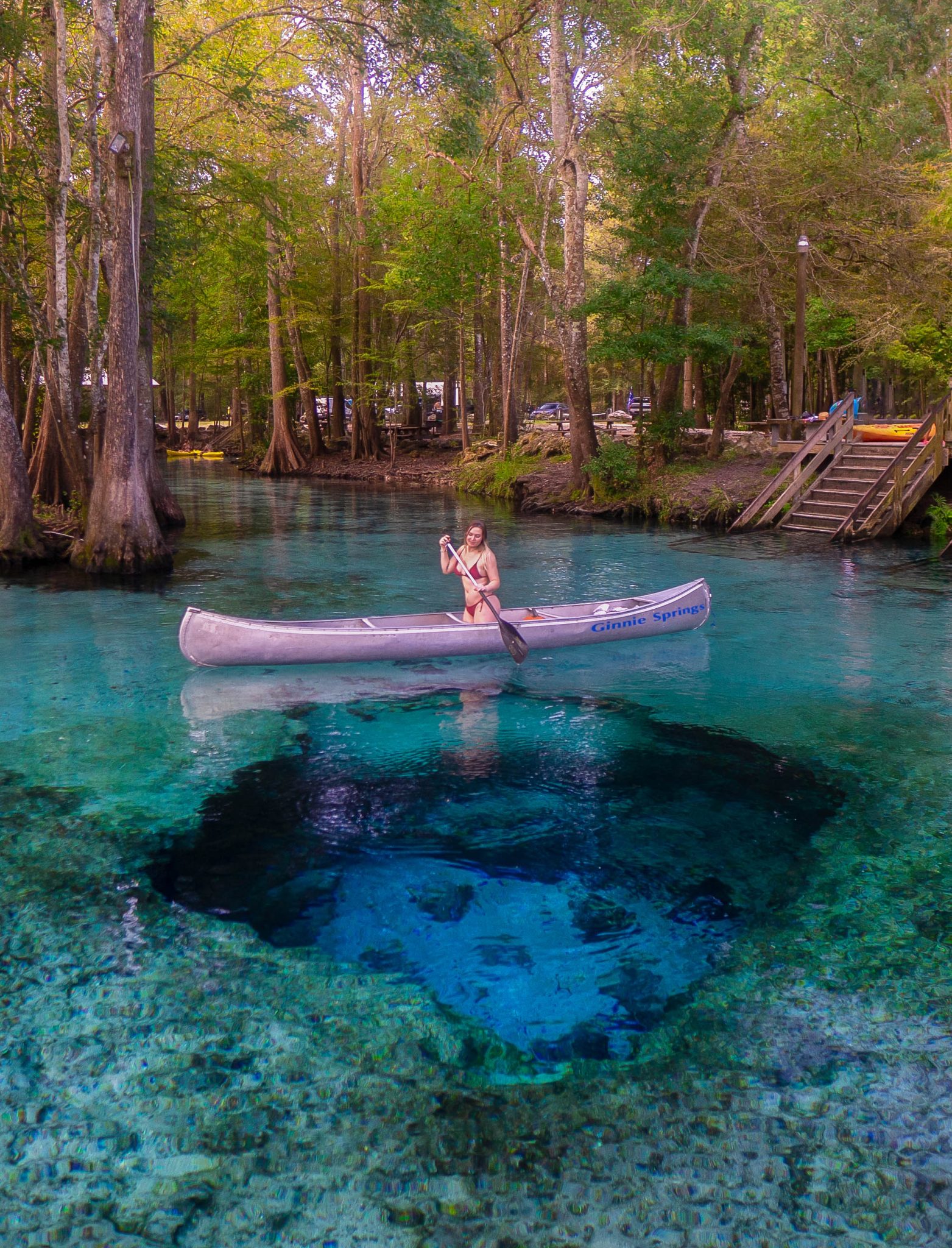
Ginnie Springs is a magical place. There really isn’t anywhere else in Florida you can camp right on the river, next to a crystal clear spring, and openly drink alcohol (legally). Ginnie has a reputation for being the “party spring”. It’s privately owned, and you are allowed to bring alcohol to openly consume here. This simple fact is the reason many choose camping at Ginnie Springs over camping at other Florida spring locations. That being said, where there’s drunk people, there’s litter.
When you’re out enjoying the natural beauty, please remember to pack out your trash and use the designated disposal areas. It’s super easy to get caught up in the fun, but our springs really need your support to stay pristine. They’re not just gorgeous; they’re also vital sources of drinking water and homes for endangered wildlife. Thankfully, there are plenty of trash cans around the property, making it simple to clean up after yourself. I’ve noticed a lot of litter floating down the river during my visits, especially in the summer and around holidays. So, if you spot any trash while you’re here, feel free to pick it up and toss it away! Together, we can make a big difference!


The Springs
Ginnie Springs is made up of seven crystal clear springs that feed into the tannic Santa Fe River. Note that during rainy summer months, many springs in this area “brown out”as a result of the rise in water level of the rivers. Ginnie Springs closes when this occurs. Check their website to stay up-to-date prior to visiting.


Fees
Ginnie Springs isn’t exactly the cheapest spring you can visit in Florida. In fact, it’s probably the most expensive.
The rates are $20/adult during the off-season, and $25/adult during “season”. Entry for children (5-12) is $5 during off-season and $6 during high-season. Children under 5 are free.
I believe on-season rates run from Memorial Day weekend through the end of summer, although there are no specific dates on their website that designate when on/off season is. It does, however, state this:
“Prices may be higher on major holidays/holiday weekends.
Prices are subject to change without notice and do not include Florida sales tax“
If you will be in the area for a few days, I recommend purchasing the camping pass, even if you aren’t planning on camping there. It gives you two-day access that is cheaper than purchasing two separate day passes.

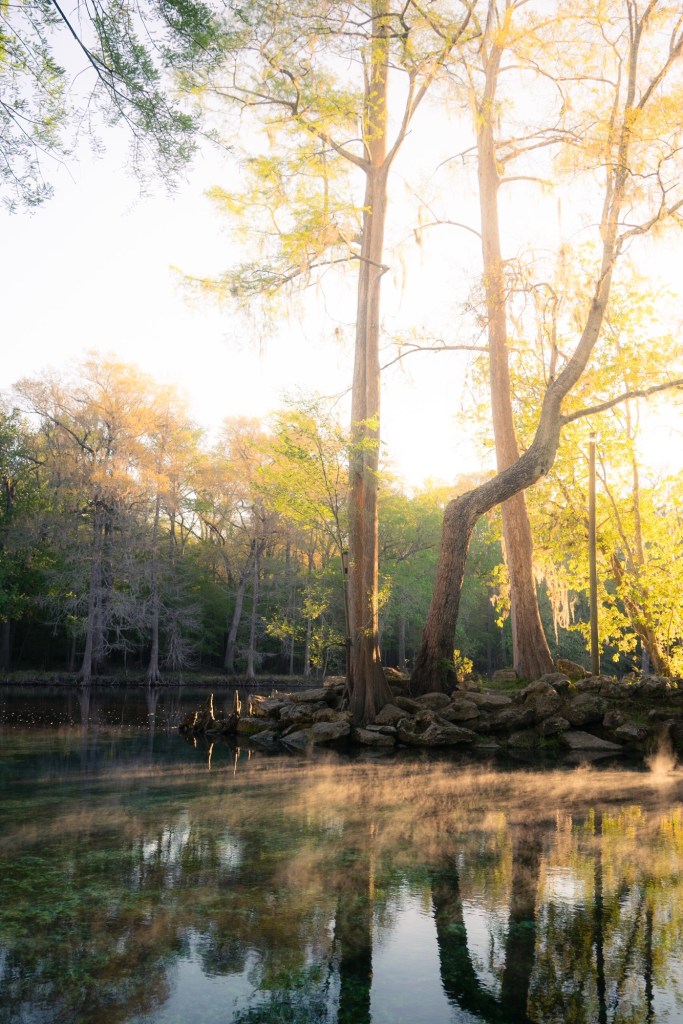
Steam coming off of Ginnie Springs in the early morning
Activities
Camping At Ginnie Springs
Rates: Adults – $30/night during off-season; $40/night during “season”; Children (5-12) – $8/night during off-season and $10/night during high-season. Electric and water site fees range from $15 (standard) to $30 for a group site.
Note that you must be 18 or older or accompanied by a parent to camp. During the on-season months, there is a two night minimum stay for campers checking in Thursdays & Fridays.
Tubing
It takes about an hour and a half to float down the Santa Fe River from the tube launch to the tube exit. It’s very easy to tube 2-3 times in one day. I recommend parking at Ginnie Spring, the main spring located right in between the tube launch and the tube exit. It’s about a 15 minute walk from here in either direction to the tube launch & exit. If you have two cars, you can also park one at the launch and one at the exit so that you don’t have to walk.
Paddling
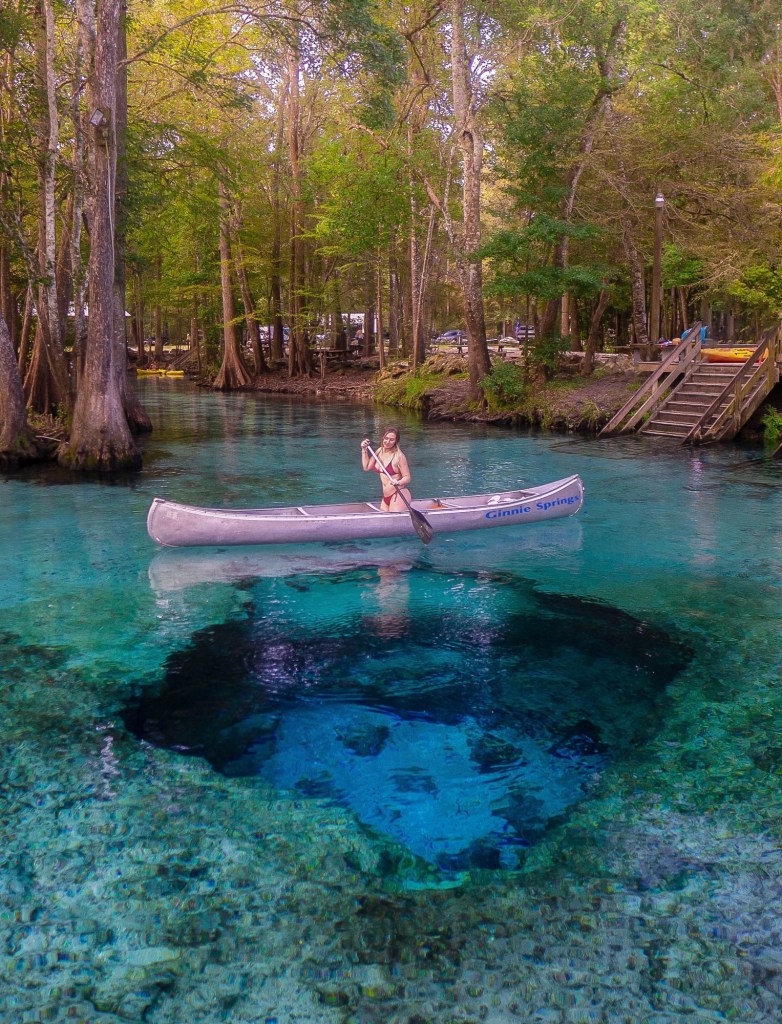
By far my favorite way to explore this area is by SUP or kayak. There are paddle boards and canoes available for rent at Ginnie Springs, but make sure you reserve yours ahead of time here, as they do tend to book out quick in the summer and on holiday weekends.
You can launch from any spring or the tube launch, but for rentals they are stored around the main spring (Ginnie Spring). For those launching their own SUP or kayak, I recommend launching here at Ginnie Spring because it is in the middle of the spring complex. This allows you to paddle up and see the devils spring complex, and down to see the lower springs, and then paddle back up to the point you launched at (if you launch from here this is also where you will park your car). If you launch from the tube launch, you will have to paddle upstream back to where you parked once you reach the end, or walk and carry your paddle board/kayak following the tube trail. It’s a long walk from the end so paddling (even upstream against the current) is my recommendation if you park up at the tube launch.
Note that guests must rent vessels by 2pm (1pm during off-season), as rentals are not allowed to be out after dark.
Rental Prices:
Canoe/Kayak Paddles: $6 (free with canoe/kayak rental)
Canoe or Kayak (3 hours): $24
Paddleboard (3 hours): $24

Diving
Upstream lies the “Devil’s Spring System”. This set of three separate springs may appear to be only one to the untrained eye. However, if you look closely you’ll see the fissure that makes up “Little Devil” Spring furthest from the river, followed by Devil’s Eye in the middle, and lastly, usually covered with tannic river water and marked with a bright orange buoy, lies Devil’s Ear.
Only Certified Cave Divers can enter the caverns of the Devil’s Spring System.
The next spring downstream lies the main Ginnie Spring. Divers come from around the world to dive the famous Ginnie Ballroom, and you don’t need special Cave Diving certification to do so. Certified Cave Divers of all skill levels can enter the Ginnie Ballroom.
Note that diving is not permitted on some major holiday weekends!
Diving Prices:
Certified cave divers: $28
All other certified divers: $36
Annual dive pass (cavern – cave): $440

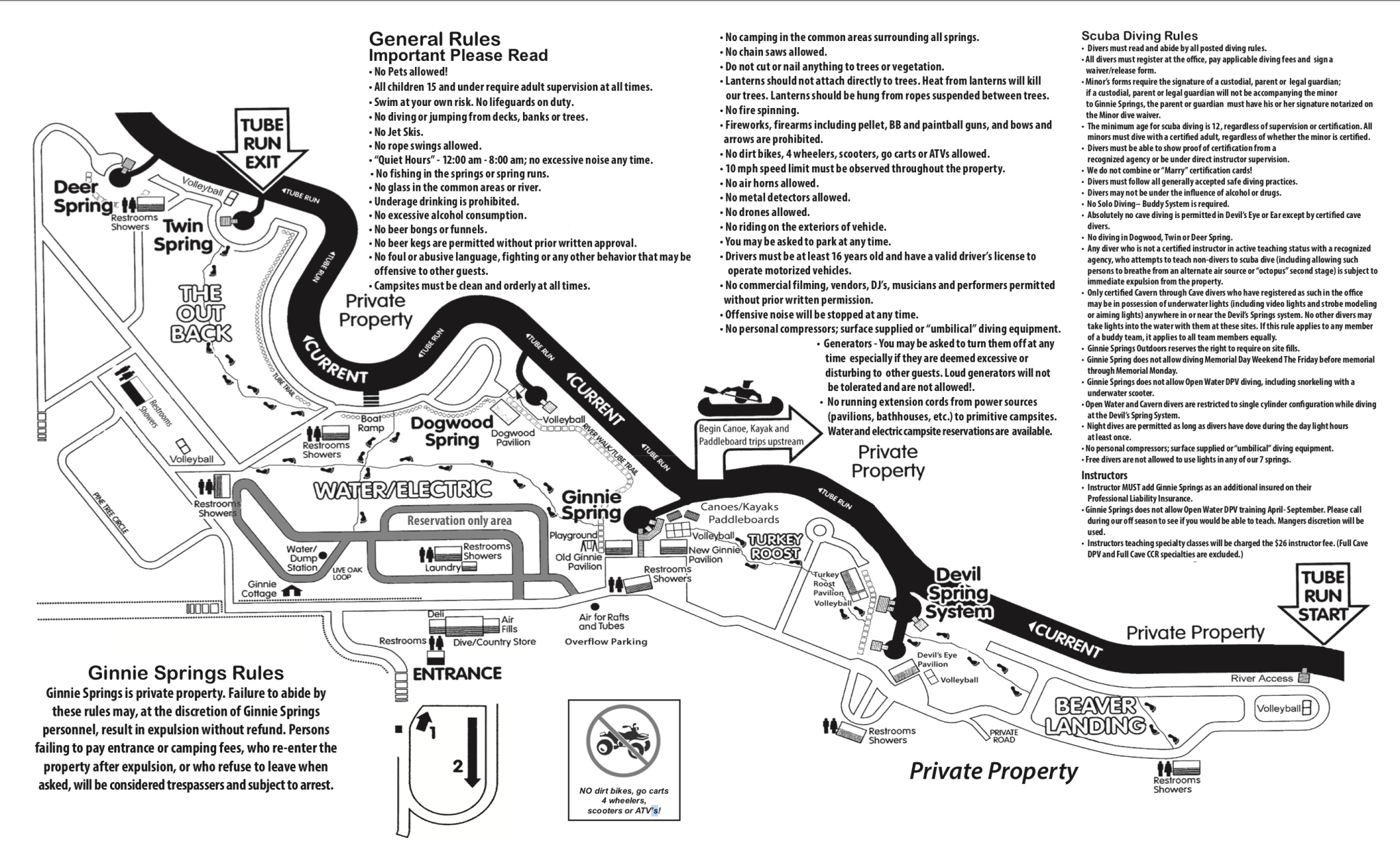
Ginnie Springs map
Leave Fluffy At Home
There are NO PETS ALLOWED AT GINNIE SPRINGS. I say this in all caps because I can’t tell you how many times I’ve seen them turn away people who have driven hours with their pup, only to be told they cannot bring their furry friend in with them. They do not allow pets. They don’t even allow service animals. Period.
Don’t Lose Your Pass
When you pay your entry fee, you will receive a pass to hang on your rearview mirror that shows the number of people in your vehicle. DO NOT LOSE THIS PASS. When you leave the park, they take the pass back and open the gate. Think of it as your exit key. If you lose it, they will charge you again upon leaving for however many people are in your car.
If you have multiple carloads, make sure there is the same number of people in the car when exiting as there were when you entered; if your pass says “3” and there are 4 people in your car, they will assume that person was not accounted for and charge you for that person in order for you to leave.
What To Bring
- Tent or RV – Ginnie has primitive campsites with fire pits. There are bathroom and shower facilities dispersed at regular intervals throughout the property, as well as sites with RV hookups. Note that spring and river-front plots fill up quickly in the summer months!
- Firewood – This is a popular site and is generally well maintained. You may find some branches on the ground or leftover firewood in fire pits that people have brought in, but I’d recommend purchasing firewood at one of the stands off of 340 on the way to the spring. If coming from the direction of High Springs, there are a few stands that use the honor system to allow you to purchase a bundle for $5, so make sure to bring some cash!
- Cooler & ice – If you want to keep your food and drinks cold, remember to bring a cooler and get some ice at a gas station or the High Springs Ice Cube Express vending machine before you arrive.
- Sunscreen – Always a must when out in the Florida sunshine!
- Snorkle, goggles & flippers – Don’t forget your goggles! Half the beauty of the springs lies below the surface. Unfortunately, Ginnie Springs is no longer renting snorkels due to Covid-19. They have some for purchase at the general store, but they’re not cheap. I recommend bringing your own or stopping by Wall-Mart or Publix on the way and picking some up!
- Towels – Make sure you bring your own towel! There’s some souvenir towels at the general store if you do happen to forget.
- Water – Bring your own drinking water or water filter. If you forget it, there’s bottled water for purchase at the general store. There’s also water taps next to the campsites you can fill up at as well.
- Food/snacks – There’s grills all around the property, so feel free to cookout! Don’t forget to pick up some charcoal on the way, and bring your grilling utensils and a cooler packed with food! If you forget to bring food, they do have snacks at the front office and a concession stand that serves burgers, hot dogs, etc. Note that the concession stand is only open on the weekends during the off season, but daily during the summer.
- BYOB – Alcohol is allowed here, however they don’t sell it here. Bring any beer, liquor, and mixers you might need!
- Floats or tubes – Feel free to bring your own floats so you don’t have to pay to rent them. They have a station next to where you pick up the tubes where you can will your floats and sleeping mattresses with air.
- SUP/Kayak/Canoe – If you bring your own watercraft, there is no fee to launch it!


So there you have it, everything you need to know for visiting and camping at Ginnie Springs. I hope this has helped make planning your trip a breeze and enjoy your trip to the springs!
Have you visited the Florida springs before? If so, which one is your favorite? Leave a comment below!
Sara travels,
Sara Vozel
Planning on visiting some other Florida springs? Be sure to check out these posts below:
Near Orlando : 5 Things To Do At Weeki Wachee Springs
Near Ocala: Alexander Springs: The Perfect Day Trip in Lake County, Florida
Near Ocala: Exploring Silver Glen Springs in the Ocala National Forest